.svg)


Root canal treatment
Root canal therapy (also known as endodontic treatment) is a highly effective way to save a damaged or infected tooth. Thanks to modern dental techniques and technology, the process is now quicker, more comfortable and more successful than ever.

What is
root canal therapy?
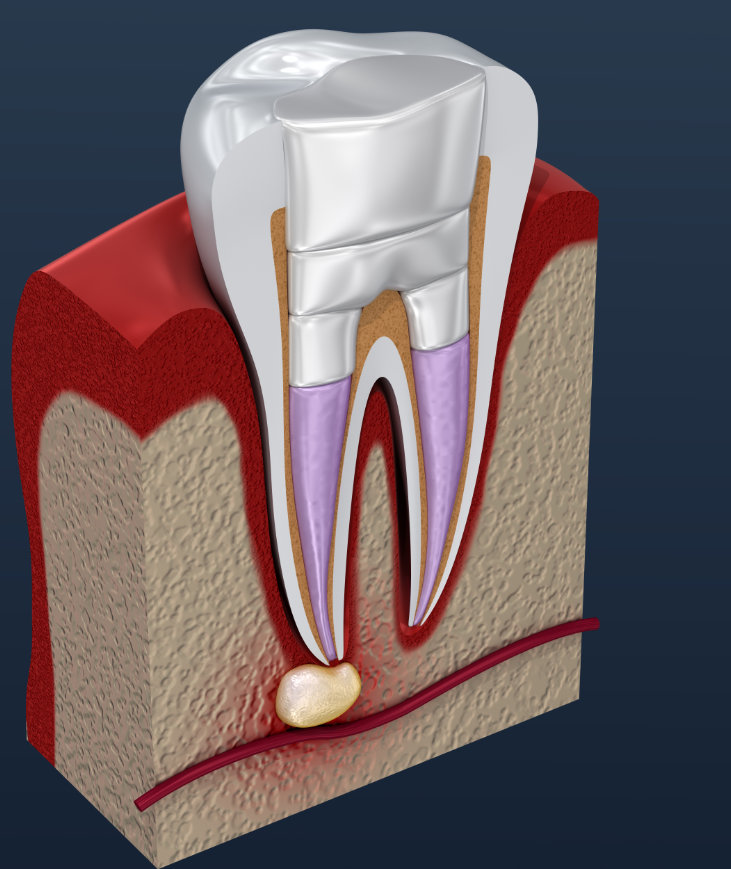
Root canal therapy involves removing the infected or damaged pulp (the soft tissue inside your tooth) before cleaning, disinfecting and sealing the inner chamber and root canals.
Though the pulp is no longer present, the tooth is kept healthy and functional thanks to the support of surrounding tissues. Saving your natural tooth is always the best option for your long-term oral health and can help you avoid more costly treatments in the future.
What causes
pulp damage?
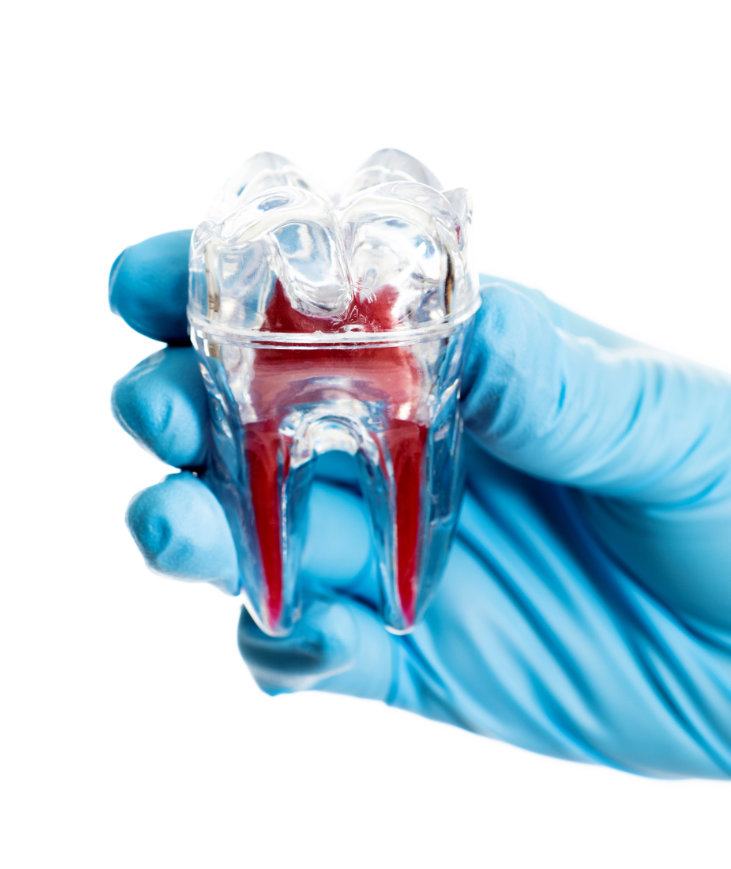
Pulp damage can occur for several reasons, including:
- Deep tooth decay
- A cracked or broken tooth
- A traumatic injury (such as a blow to the mouth)
- Repeated dental procedures or large fillings
- Periodontal (gum) disease
Root canal treatment process
Endodontic treatment can usually be performed in just one or two visits and involves the following steps:
The area is carefully numbed and a small protective sheet, called a ‘dental dam’, is placed over the teeth to keep the area clean and dry – this is essential for effective treatment.
A small opening is made in the crown of the tooth to allow for the removal of the pulp and to shape the space prior to filling.
After cleaning and shaping, the root canals are filled with a rubber-like material, called ‘gutta-percha’, and then sealed.
In most cases, a temporary filling is used to close the opening. If the tooth lacks sufficient structure to hold the restoration in place, we may place a post inside the tooth before it is built up with a solid core.
If the tooth has been considerably weakened, we may advise you to have a crown fitted to protect it from future damage and infection.

Benefits of
root canal treatment
- Saves your natural tooth from extraction
- Relieves pain and discomfort caused by infection
- Prevents further spread of infection
- Preserves your bite and smile without the need for implants or dentures
- Cost-effective compared to tooth replacement options
Does root canal therapy hurt?
Thanks to modern techniques and local anaesthetic, most patients report little or no discomfort during their root canal procedure. In fact, many are relieved by the pain the treatment takes away.
You may experience mild tenderness afterwards, which is usually manageable with over-the-counter pain relief. If pain persists or worsens, contact us immediately.
What are alternatives to
root canal treatment?
The alternative to root canal therapy is the extraction of the infected tooth, but loss of a tooth can create functional and aesthetic problems. A lost tooth can also be replaced with a denture, bridge or implant but these treatments can be more costly.
How successful are
root canal treatments?
If carried out to a high standard, root canal therapy is successful in 95% of cases. Problems can occur if the tooth develops decay, the restoration placed on the tooth fails, the tooth develops a crack or, despite good care, the tooth does not heal as expected.
If appropriate, further endodontic treatment or surgery may be carried out.

Book your
appointment today
If you’re suffering from tooth pain or think you might need a root canal, don’t wait. We’re here to help you protect your smile with safe, effective treatment.
.svg)