.svg)


Sep 29, 2026
Is Invisalign worth it? An honest look at cost, results and commitment
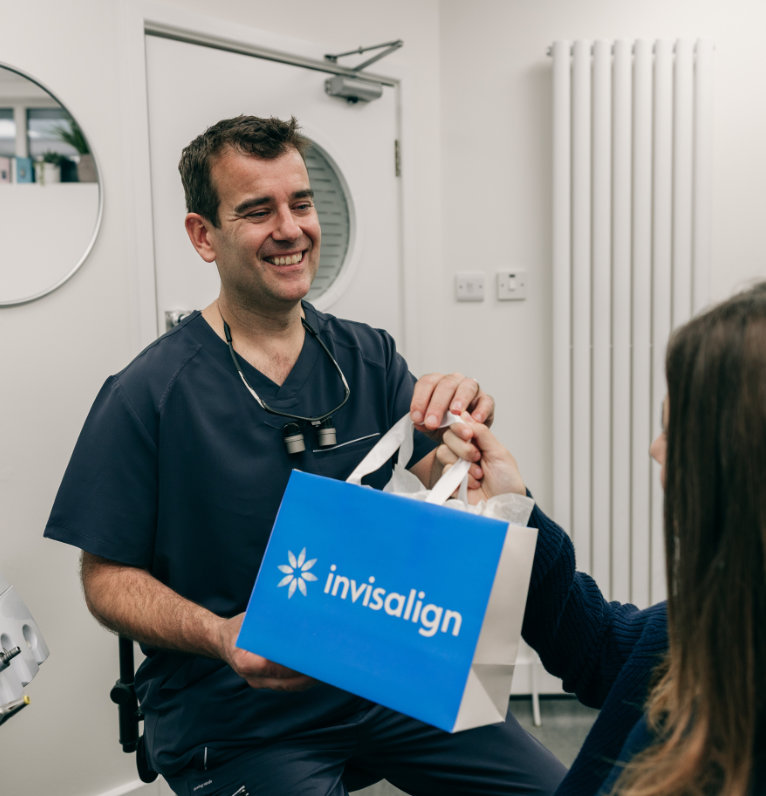
Invisalign® is one of the most popular ways to straighten teeth, particularly for adults who would rather not wear fixed braces. It is also a significant investment, so it is fair to ask whether it is worth it.
The honest answer is that for many people it is, but it depends on what needs correcting, and on whether you are ready for the daily commitment it involves. This guide covers both sides.
What Invisalign can treat
Invisalign uses a series of clear, removable aligners, each moving your teeth a small amount. It can be used to treat a wide range of common problems, including:
- crowded or overlapping teeth
- gaps between teeth
- some bite problems, such as overbites, underbites and crossbites
- teeth that have moved again after previous orthodontic treatment
More complex cases can sometimes still be treated with aligners, but some are better suited to fixed braces, or a combination of the two. That is something only an assessment can tell you.
What affects the cost
The cost of Invisalign depends mainly on how much movement your teeth need and how long treatment takes. A small correction to the front teeth costs less than a full course treating crowding and bite problems together.
The price should include your assessment and digital scan, all of your aligners, your check-ups during treatment, and a plan for retainers afterwards. It is worth checking what is and is not included wherever you are quoted.
At Stoke Bishop Dental Centre you can see our current prices on our costs page. Interest-free payment plans are available, and plan members receive a discount on orthodontic treatment.
The commitment involved
This is the part that decides whether Invisalign works for you. The aligners only move your teeth while you are wearing them, so:
- You need to wear them for 20 to 22 hours a day. In practice, that means taking them out only to eat, drink anything other than water, and clean your teeth.
- You need to brush before putting them back in, so food is not trapped against your teeth.
- You change to a new set of aligners every one to two weeks, as your treatment plan sets out.
- You attend regular check-ups so we can make sure your teeth are moving as planned.
People who wear their aligners consistently tend to be pleased with their results. People who often leave them out usually find treatment takes longer, or does not go as planned.
What happens after treatment
Once your teeth are in their new position, you will need retainers to keep them there. Teeth have a natural tendency to move back, particularly in the first months after treatment. We will explain which type of retainer suits you and how long to wear it.
When fixed braces might suit you better
Invisalign is not the right choice for everyone. Fixed braces may be a better option if:
- your teeth need more complex movement
- you are honestly not sure you will wear aligners for most of the day
- cost is a deciding factor, as fixed braces are often less expensive
For a full side-by-side comparison, read our guide to Invisalign vs braces. For teenagers, there is also Invisalign Teen, which includes wear indicators so parents can see whether aligners are being worn enough.
So, is it worth it?
If you have a problem Invisalign can treat well, and you are ready to wear your aligners as directed, it is an effective way to straighten your teeth discreetly and comfortably. If either of those is uncertain, it is worth talking through the alternatives first.
Find out if Invisalign is right for you
The best way to know is a proper assessment. Our orthodontist, Dr Jay Wilson, will look at your teeth, take a digital scan, and talk you through what Invisalign could achieve for you, what it would cost, and whether another option might suit you better. Book a free consultation at our Stoke Bishop practice. There is no obligation to go ahead.
You can also read more about Invisalign in Bristol.
.svg)